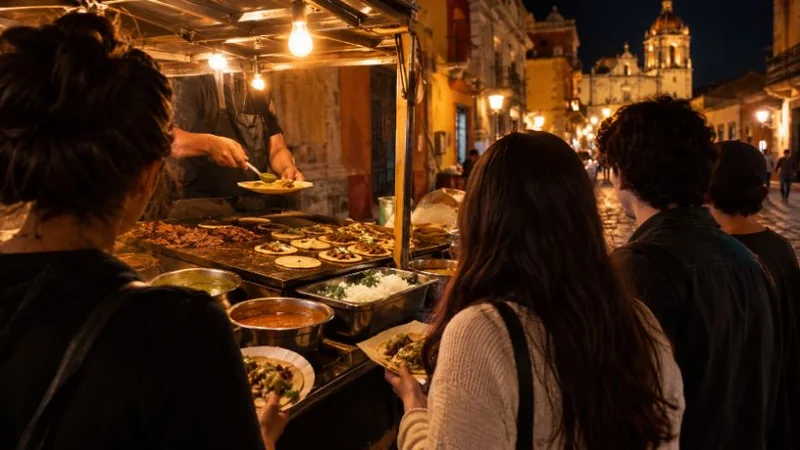
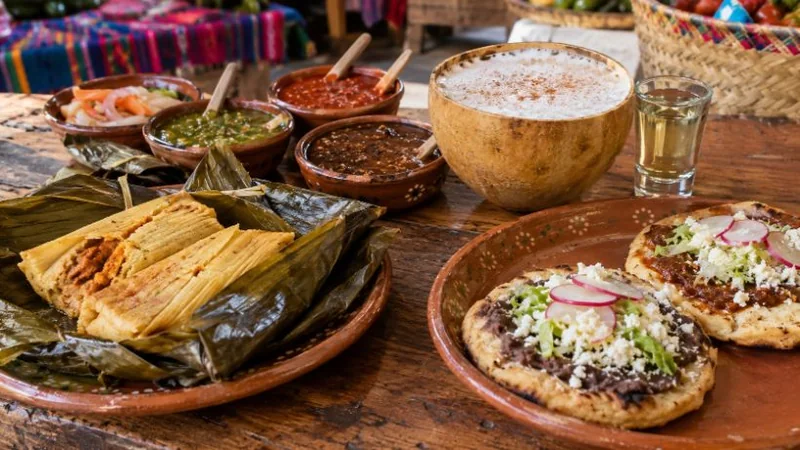
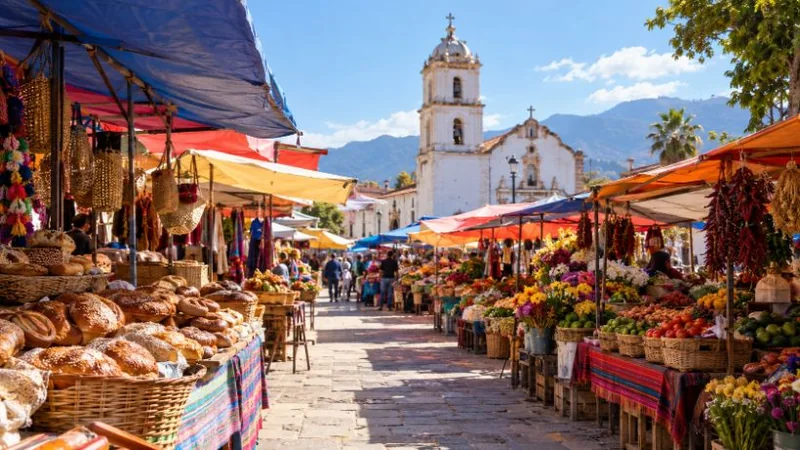
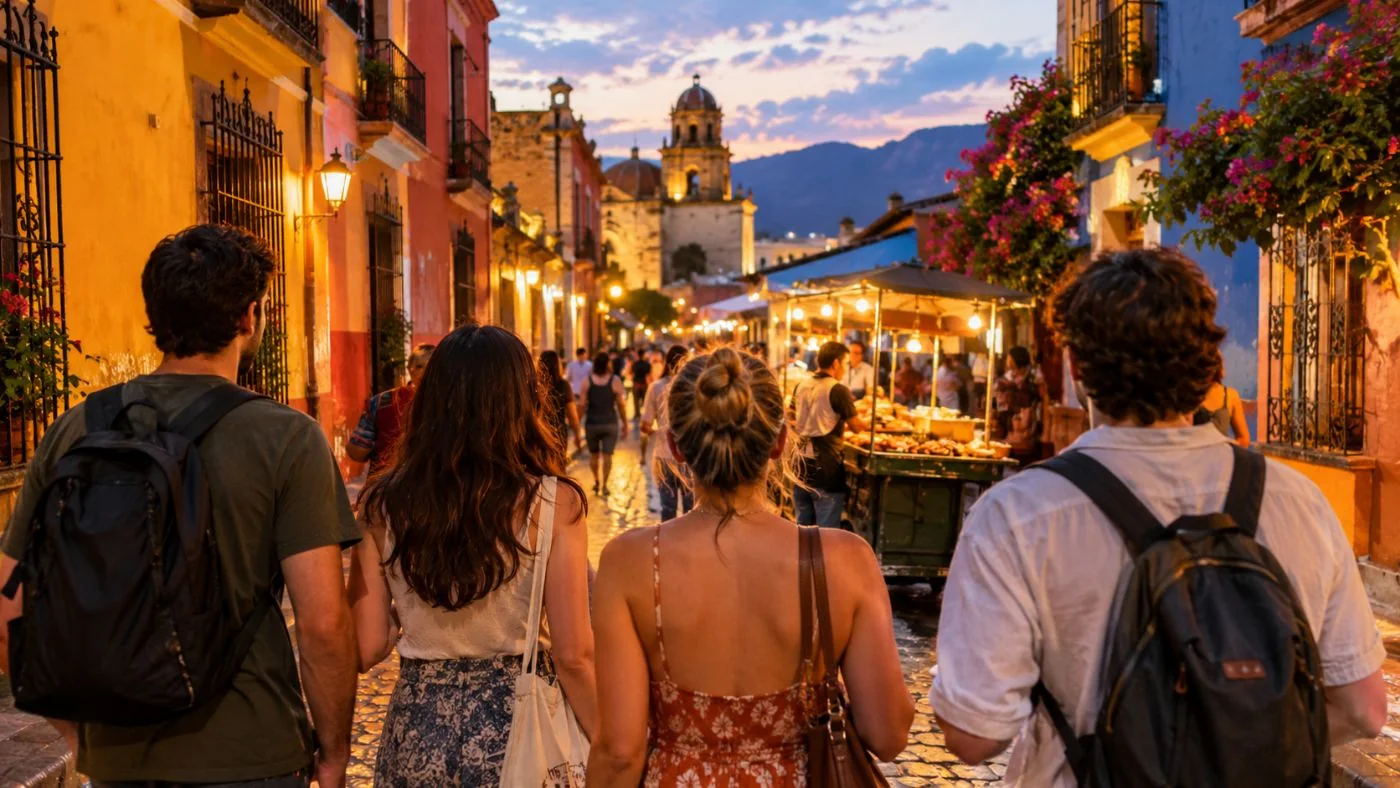
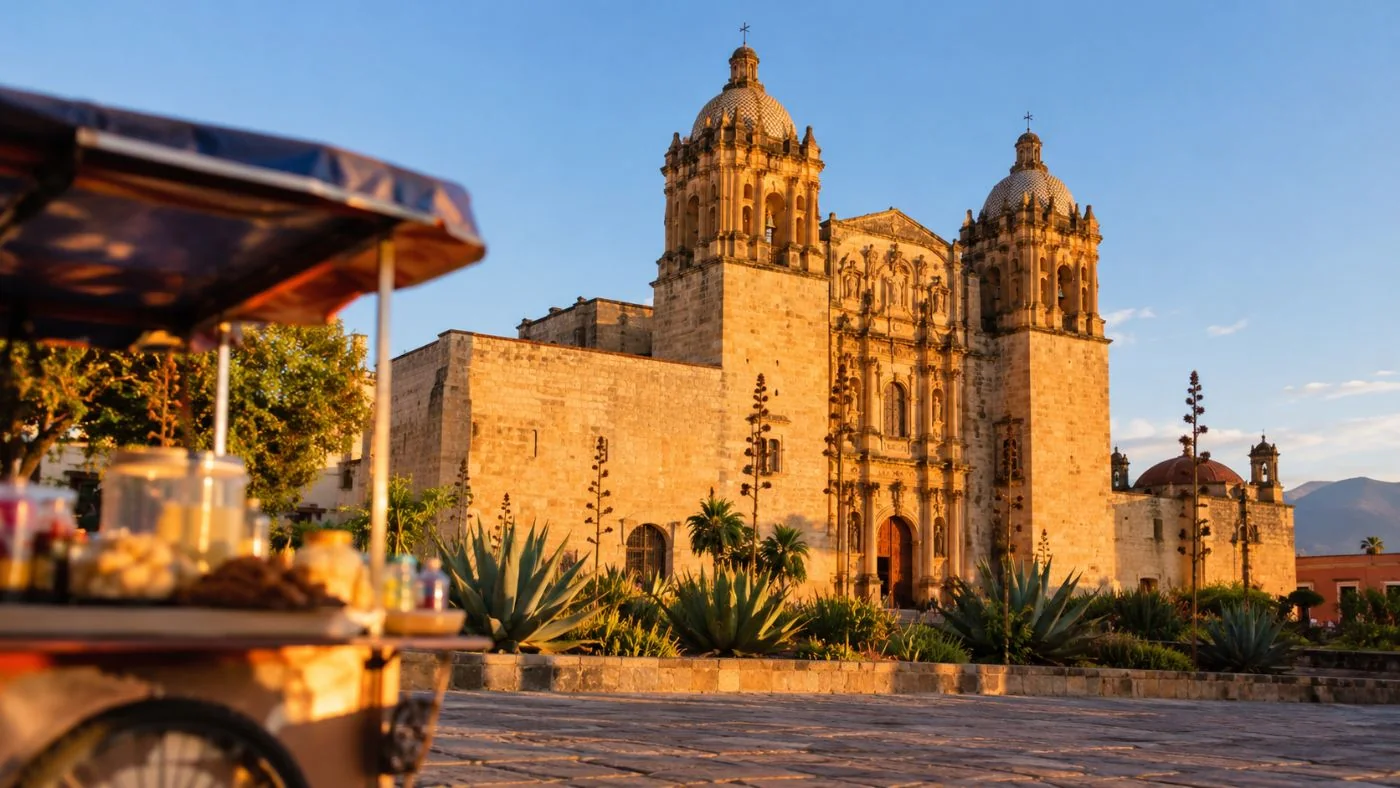
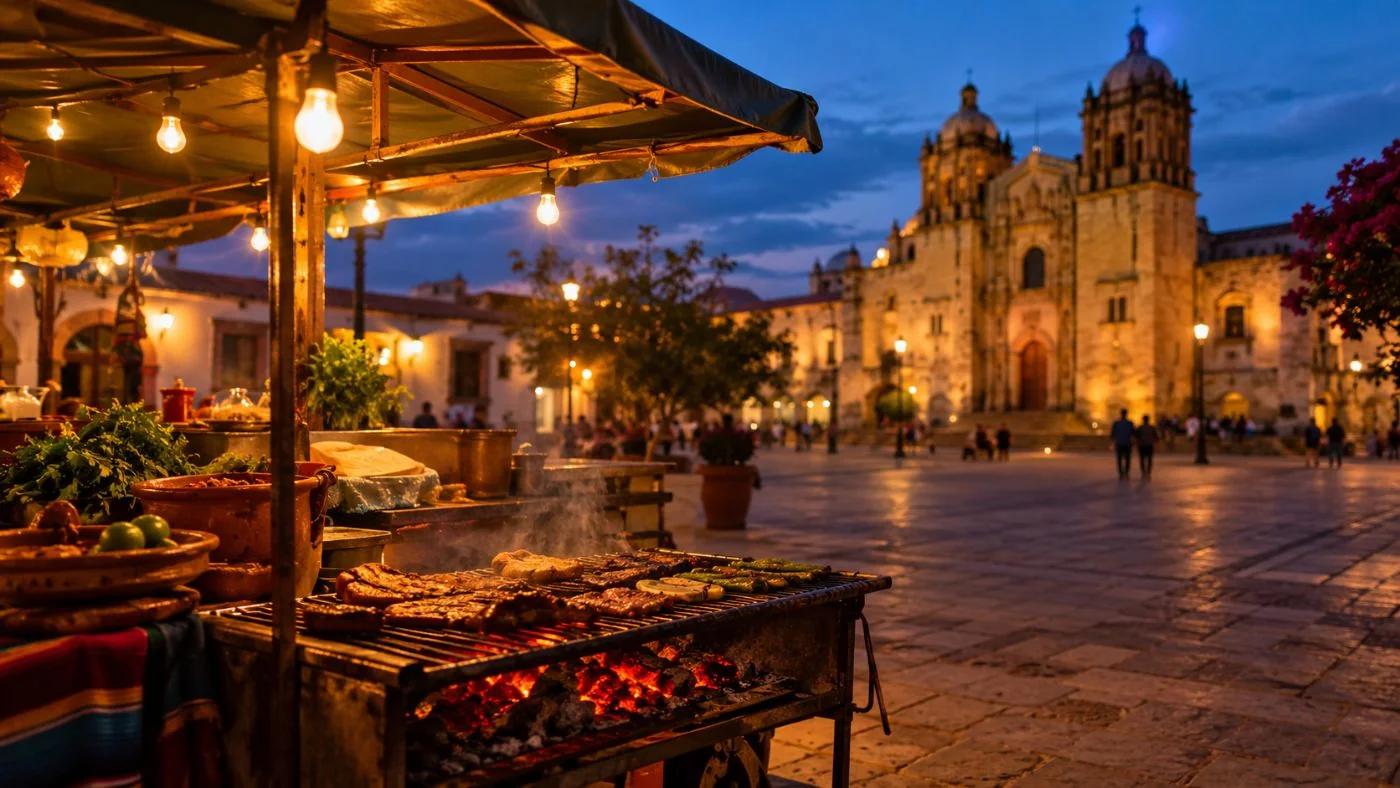
Tlayudas over charcoal, a smoky grilled-meat aisle, tejate in a gourd bowl. Which tour walks the evening
stands, which works the markets, and which one suits your diet.
Night or day, namedEach card says whether it is an evening street crawl, a market morning or a cooking class
Diet limits up frontVegetarian, vegan, allergy and age limits taken from each listing
Free cancellation24 hours ahead on every tour listed here, as each listing states
Secure bookingBooked on GetYourGuide, ticket on your phone
Tours
Choose your Oaxaca food tour
In the centre, an evening crawl of street stands that ends at the Zocalo. On the left, a short market walk with breakfast
or lunch. On the right, a local chef's tour of family kitchens, morning, noon or evening.
A short guided walk through Oaxaca's markets for traditional dishes and drinks, with Oaxacan sweets to finish. Breakfast or lunch, depending on start time.
What is included
Local guide in English
Breakfast or lunch, depending on the start time
Traditional market dishes, drinks and Oaxacan sweets as dessert
Meets in front of the main entrance of the Metropolitan Cathedral
Not for children under 14 or people with mobility impairments; free cancellation 24 hours ahead
The useful questions are the time of day, how big the group is, where you meet and whether your diet fits. Durations,
group sizes and limits are taken from each tour's own listing.
Tour
Meeting point
Best for
Duration
Note
Oaxaca Evening Street Food Tour, 14+ Tastings
Tacos Roy, Oaxaca de Juarez
A first night in Oaxaca: street stands, tacos, tlayudas and esquites, then mezcal and flan at the Zocalo
Three markets in one morning, La Cosecha, 20 de Noviembre with its grilled-meat aisle and Benito Juarez, plus a chocolate shop; vegetarian, pescatarian and gluten-free options
Every tour on this page lists free cancellation up to 24 hours ahead. Tips are included only on the Markets Food Tour
from Jardin Carbajal; the Tlacolula trip lists gratuities as extra.
Good to know
Most street food here has a roof.
Oaxaca City sits at about 1,550 m in a wide valley of Zapotec and Mixtec villages, and its food is built on corn, chiles, cacao and
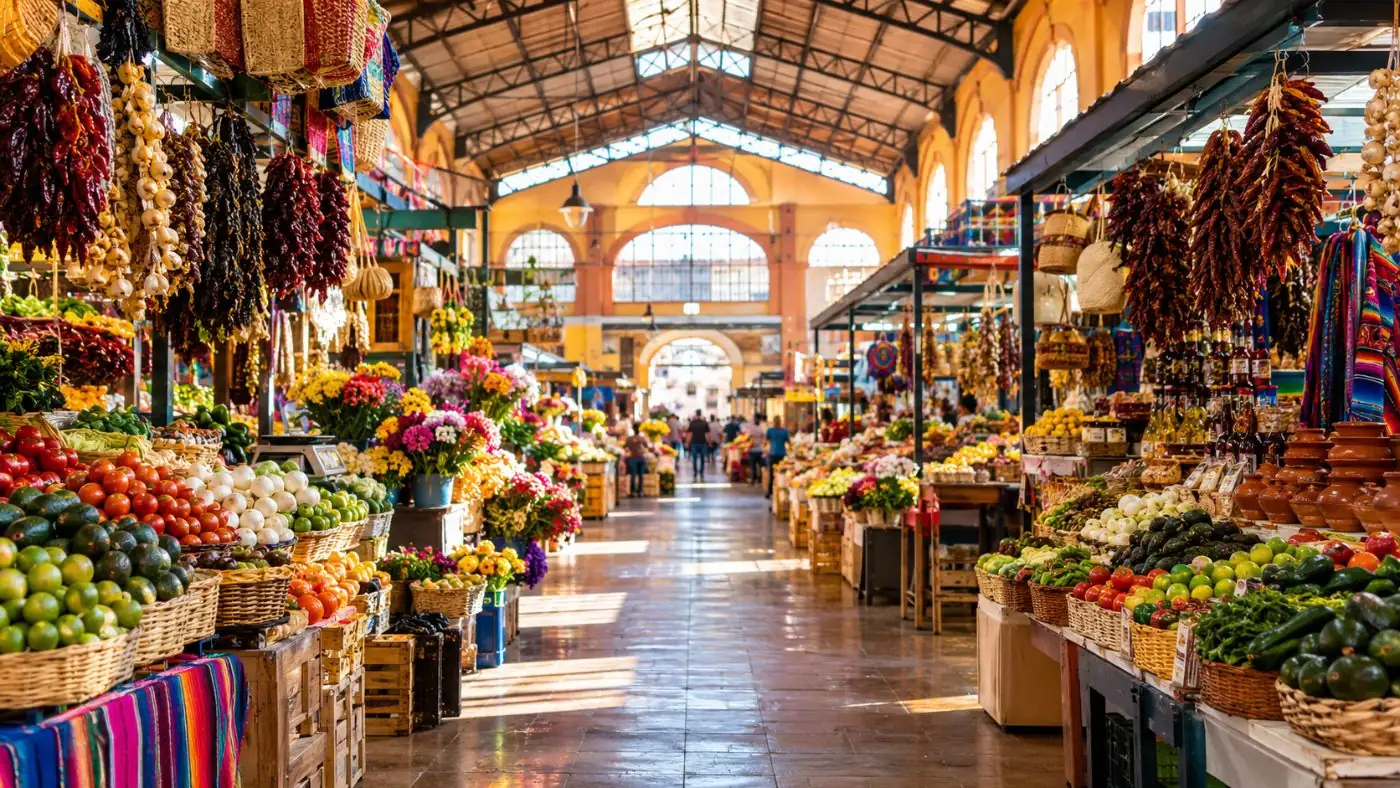
the slow pot of mole. Much of what visitors call street food is cooked inside the markets: in Mercado 20 de Noviembre, where about a
dozen stalls in the grilled-meat aisle sear tasajo and chile-red cecina over coals, in Benito Juarez next door, and in the big
Mercado de Abastos to the west.
That shapes the tours. Most listings here are daytime market walks, some are cooking classes that start with a
market, and one is built as an evening crawl of street stands that finishes at the Zocalo. Diets matter too: the evening tour
is not suitable for vegetarians, vegans or people with allergies, while two market tours and a cooking class are built around
those needs.
7
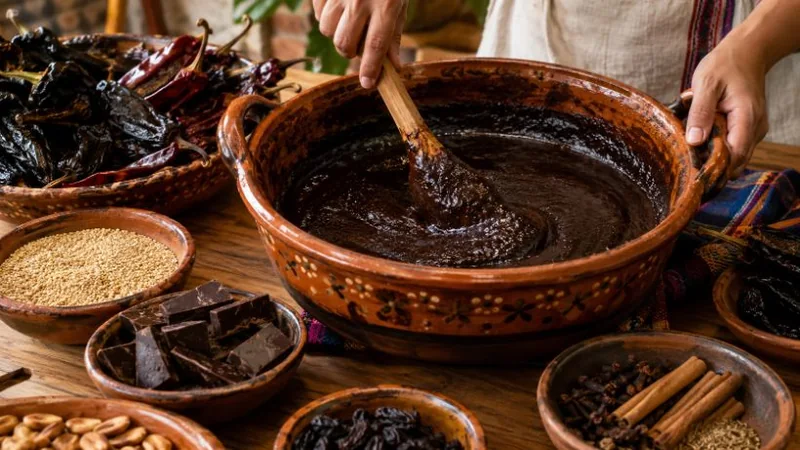
Moles usually named for Oaxaca: negro, rojo, coloradito, amarillo, verde, chichilo and manchamanteles.
Mole negro is the most complex, with around 30 ingredients.
TlayudaMemelasQuesilloChapulinesTejateMezcal
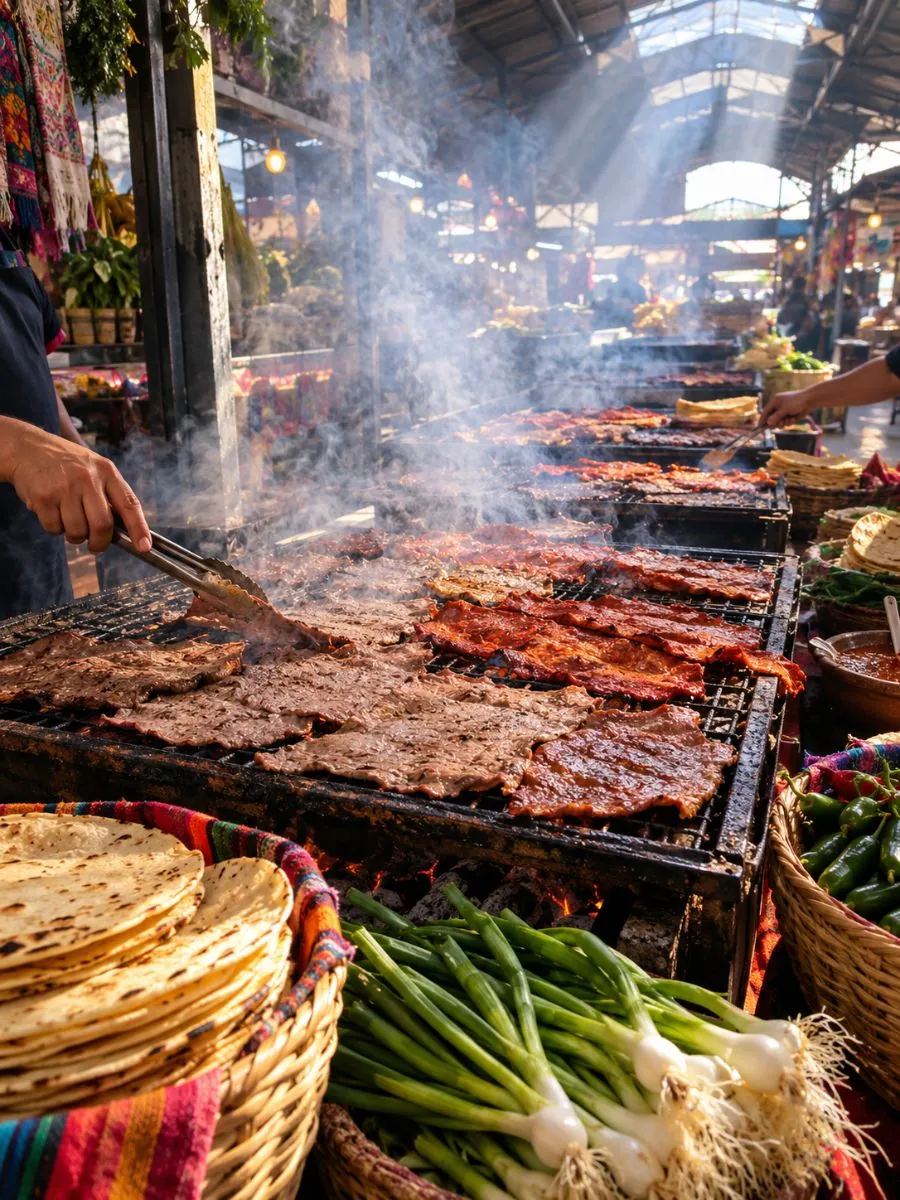
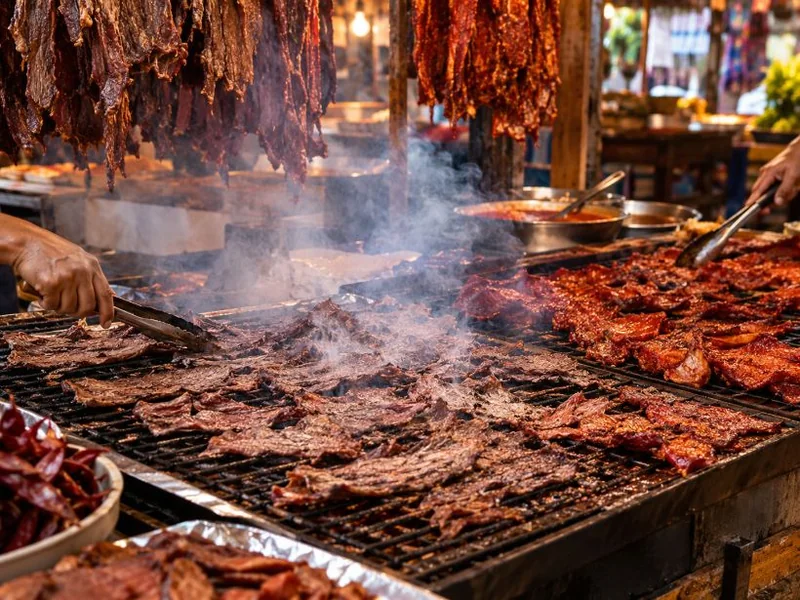
The grilled-meat aisle: pick the meat at one stall, the tortillas and salsas at the next.
01
Night or morning
Evening is for tlayudas, tacos and esquites at street stands; mornings are for markets, tejate and hot chocolate. Pick the tour by the hour you want to eat.
02
Check your diet first
The evening street tour lists vegetarians, vegans, allergies, pregnancy, no-pork, halal and celiac as not suitable. Market tours and a vegetarian class fit those needs better.
03
Come hungry, pace it
Several listings warn about portions: 14+ tastings in the evening, 20+ on the longest market tour. Skip breakfast before a market morning.
04
Water and cash
Drink bottled or filtered water, not tap water. Carry small cash for market purchases and bathrooms; one listing notes a small bathroom fee.
The evening
A street food night in four stops
How the flagship evening tour runs, according to its listing: a meeting point at a taco stand, 7 to 8 family-run stops
and a sweet finish at the Zocalo.
01
Tacos to start
The group of up to 8 meets at Tacos Roy. The first bites are tacos: campechano, de cabeza, and lechon in tacos and tortas.
Meet hungry
02
Corn, every way
Tetelas filled with huitlacoche, crisp garnachas, piedrazo with quesillo and mole tamales: Oaxaca's antojitos, most of them built on corn masa.
Family-run stops
03
Over the charcoal
Tlayudas with tasajo and grilled tortillas with meat, then esquites topped with chapulines, the toasted grasshoppers of the valley.
The savoury peak
04
Mezcal and flan
Champurrado, a mezcal tasting and traditional flan, before the walk ends at the Zocalo. The tour runs rain or shine.
Where the tours meet, who they suit, a sample food day and what to bring.
Evening street tour: Tacos Roy in Oaxaca de Juarez; the listing suggests a taxi or DiDi to get there. It ends at the Zocalo.
Food and Markets Tour: in front of the main entrance of the Metropolitan Cathedral, beside the Zocalo.
Markets Food Tour: Jardin Carbajal by the mural on Macedonio Alcala, at 9:30; the guide carries a pink bag.
Etnofood tours and the mole workshop: Xicotencatl 609 in the centre, about five blocks from the Zocalo; look for the FILOTEO sign.
Tlacolula and mezcal trips: the Jardin Etnobotanico entrance and Plaza de la Danza; transport is part of both.
Vegetarians and vegans: skip the evening street tour; the Markets Food Tour has vegetarian options, the Etnofood tour says it accommodates vegans, and the vegetarian class is meat-free.
Families: the chef's tour accepts children from 4; the Food and Markets Tour is 14+; the mole workshop is 10+.
Limited mobility: the market tours list mobility impairments as not suitable; the vegetarian class and the mezcal tour state they are wheelchair accessible.
Small-group lovers: the mole workshop and the vegetarian class cap at 4, the Food and Markets Tour at 6.
Morning: a market tour, with tejate, hot chocolate and breakfast at a market counter.
Midday: a slow lunch, or a cooking class that makes mole from scratch.
Afternoon: rest, or a mezcal tour out to the valley; in the rainy season, expect a shower.
Evening: the street food crawl, ending with mezcal and flan at the Zocalo.
Comfortable walking shoes: the market tours involve two hours or more on foot.
Rain gear from June to September, when evening showers are common; the evening tour runs rain or shine.
Small cash, a tote bag for market buys, a sun hat and sunscreen for morning tours.
An empty stomach, and a note of any allergy to show the guide before the first stop.
1,550 mOaxaca CityA mild valley climate, with an historic centre on the UNESCO World Heritage list.
14+Evening tastingsOn the street food crawl, across 7 to 8 family-run stops.
20+Market tastingsOn the 4-hour Markets Food Tour through three markets.
7MolesFrom mole negro to chichilo, the dishes Oaxaca is known for.
SundayTlacolula marketThe weekly market east of the city, with its own food tour.
24 hFree cancellationOn every tour listed on this page.
Getting there
The markets south of the Zocalo
Mercado 20 de Noviembre, Oaxaca de Juarez
Two blocks south of the Zocalo, Centro
The heart of Oaxaca's market eating, and a stop on several tours. Inside are rows of comedores and, on the east side, the grilled-meat
aisle where you choose tasajo or cecina at one stall and add tortillas, salsas and onions from the next. Benito Juarez market is next door.
Metropolitan Cathedral: the meeting point of the Food and Markets Tour, on the Zocalo
Jardin Carbajal: on Macedonio Alcala, the start of the 4-hour Markets Food Tour
Mercado de Abastos: the big supply market west of the centre, where Bourdain ate barbacoa
Alejandra was an awesome tour guide, very knowledgeable about the city and food. Plenty of tasting with good portions, highly recommended especially on your first day.
★★★★★
We went to places we'd never discover and tried food we'd never come across before.
★★★★★
Josmar was a wonderful host, friendly and knowledgeable, with authentic, meaningful stops.
★★★★★
One of the best food tours I've ever been on. Tons of food and drink, you will not be leaving hungry.
★★★★★
The guide was genuinely passionate about the food we tried, and the small group made it easy to meet other travellers.
★★★★★
Your enthusiasm was infectious and it was amazing to see Oaxaca through its food.
★★★★★
Intimate, authentic, and full of flavours, stories, and heart, far from the tourist rush.
★★★★★
Victor was superb: warm, kind, patient, and great fun. This was a real highlight.
★★★★★
A brilliant tour through the colourful streets of Oaxaca. Make sure you come hungry.
After the tasting
Mezcal at the source
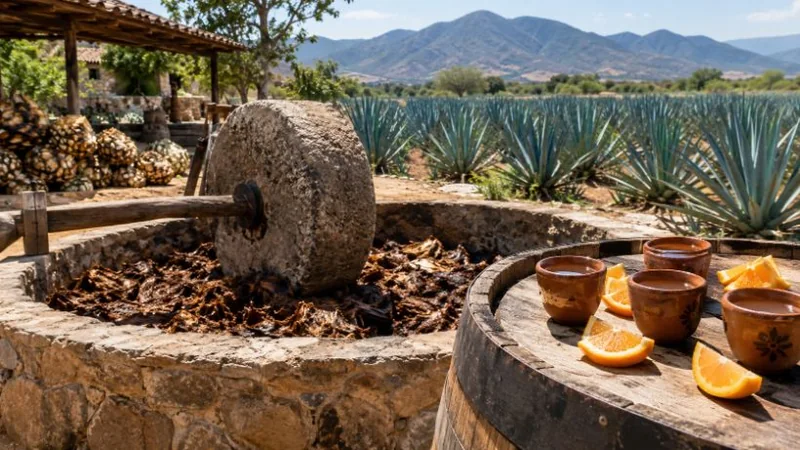
Nearly every food tour in Oaxaca ends with a small glass of mezcal. Oaxaca is by far Mexico's largest mezcal-producing state,
and this half day goes to where it is made.
Sustainable Mezcal Tour at a Family Distillery
Plaza de la Danza · 5 hours · GetYourGuide
The drink that ends most food tours, at its source: an agave plantation on the hill of Monte Alban, then a three-generation family distillery with certified sustainable practices and a tasting of five mezcals. Pickup is at Plaza de la Danza; the buffet lunch is extra.
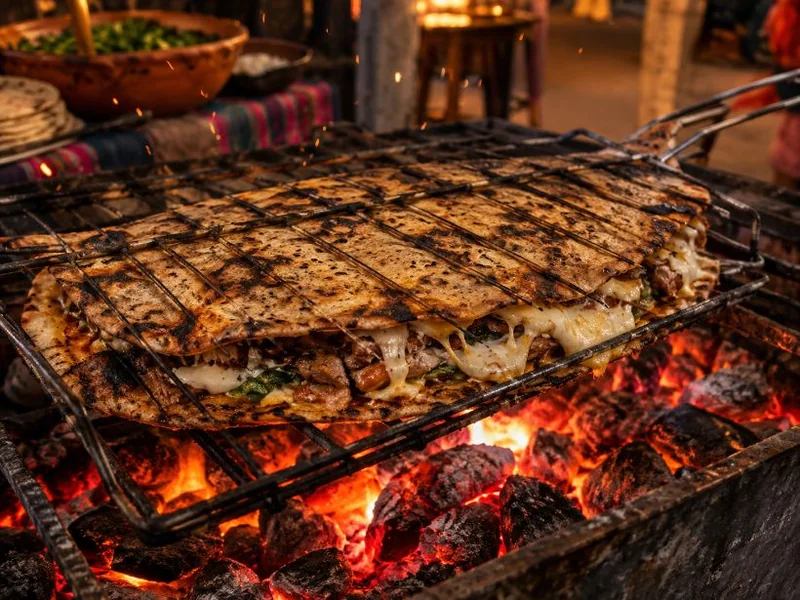
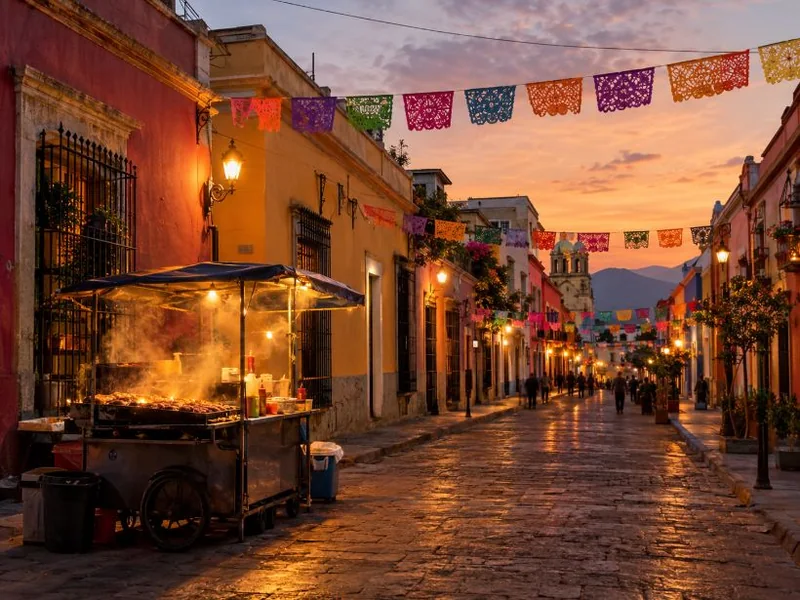
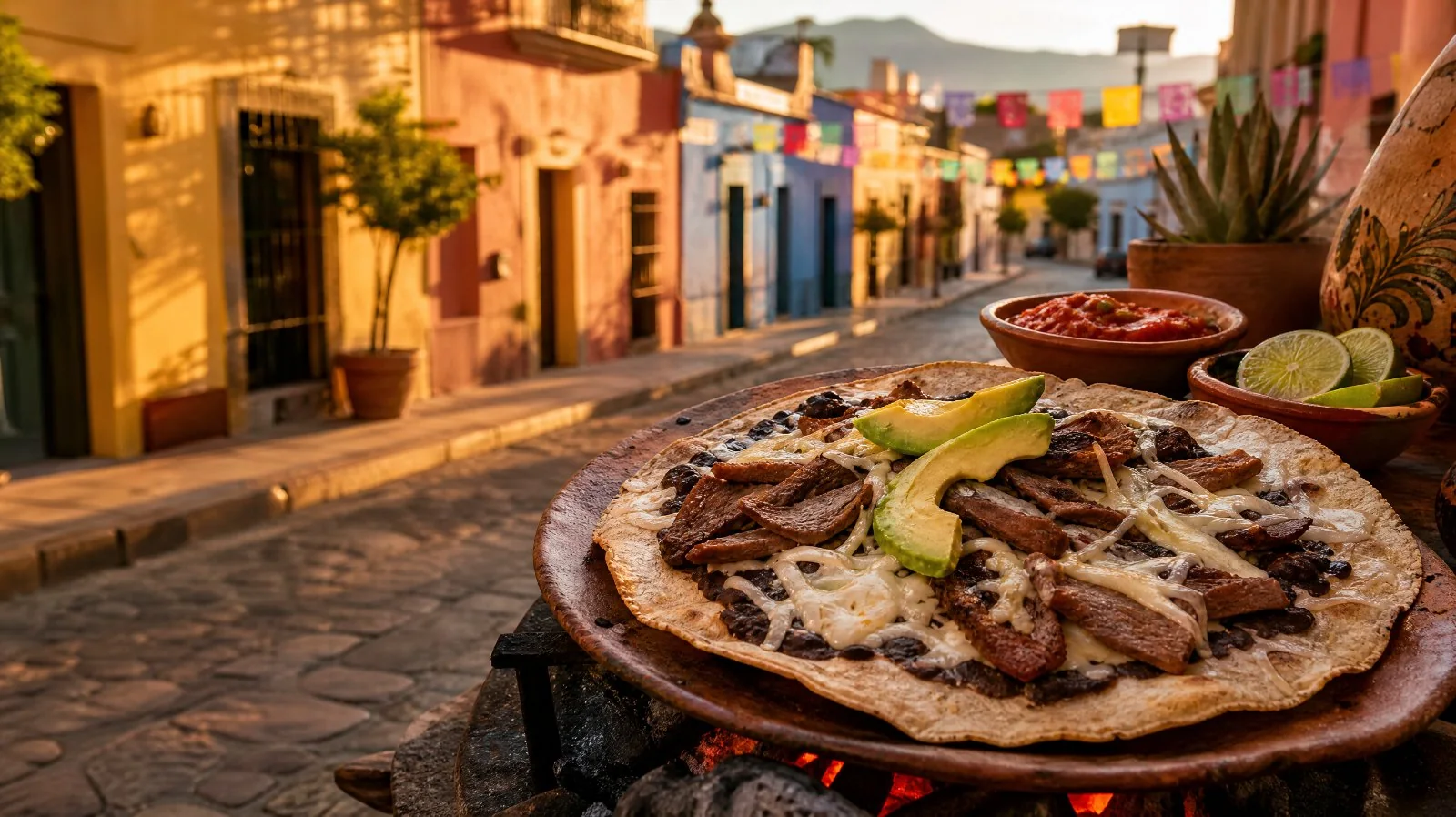
Search for Oaxaca street food and the pictures are all charcoal and cheese: a giant tortilla folded over a grill, strings of
quesillo, a smoky aisle of meat. All of it is real. What the pictures rarely show is where it happens: much of it inside the markets, by
day, and the rest at stands and corners in the evening. Here is how to read the city, and the tours.
What to eat
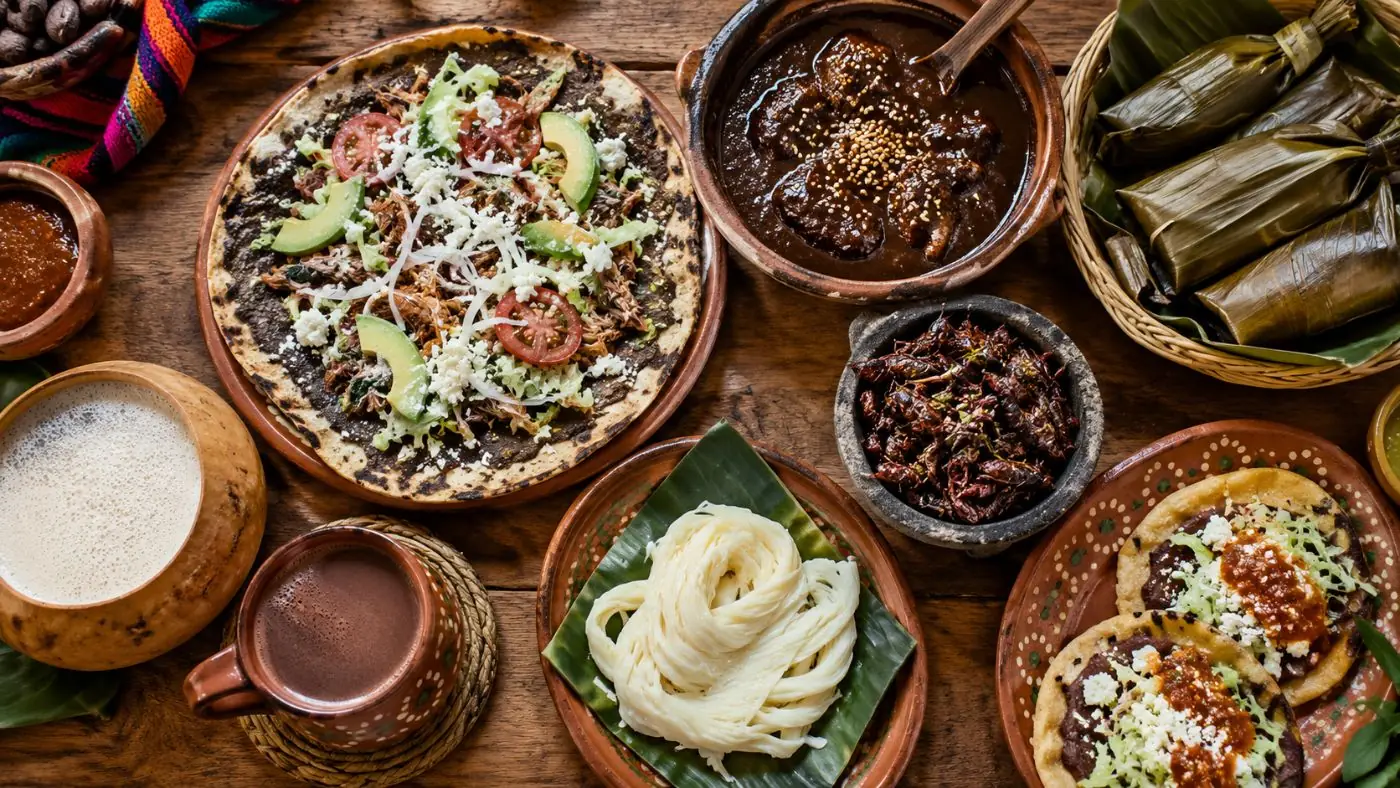
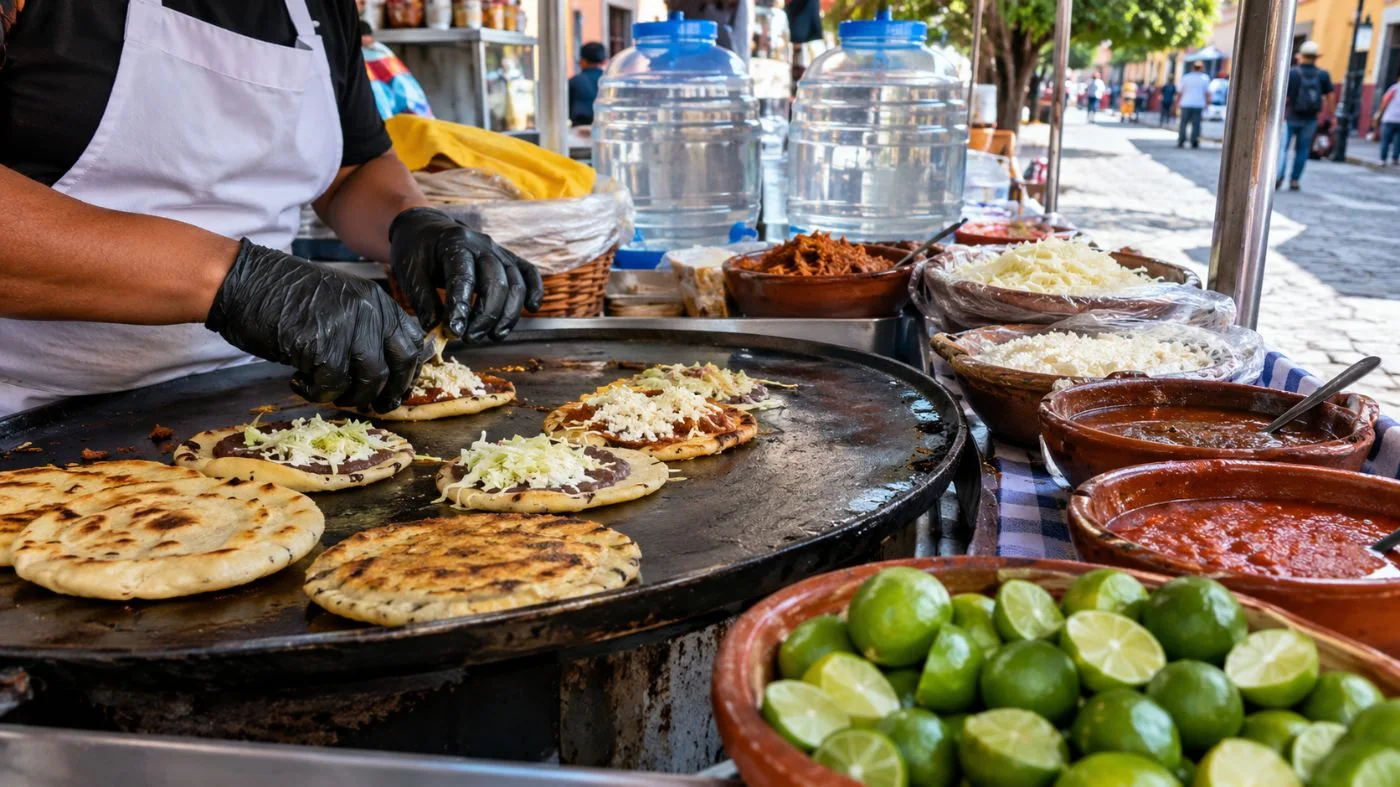
Start with the tlayuda, a large, thin corn tortilla toasted crisp and spread with asiento (pork lard), black beans and quesillo,
then topped with tasajo, cecina or chorizo and cooked over charcoal, folded or open. Memelas are thick little masa rounds with beans,
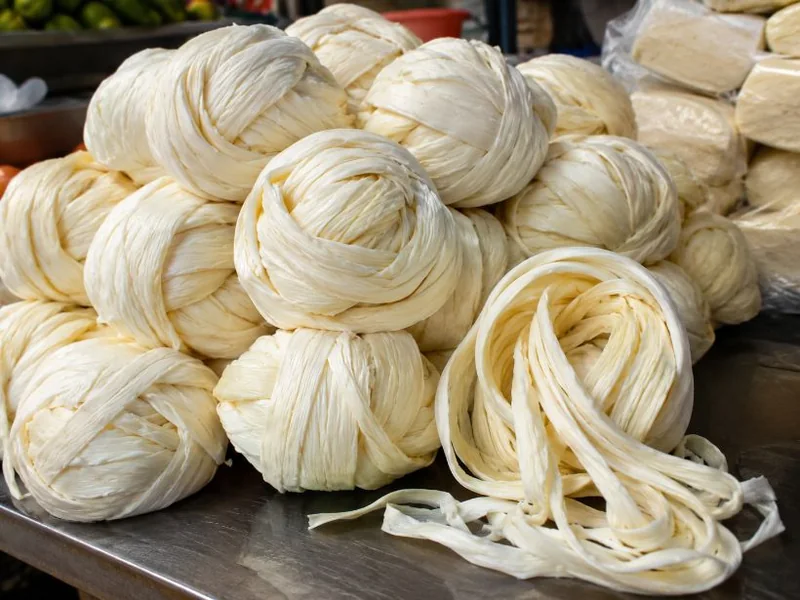
cheese and salsa; tetelas are triangles of masa, sometimes filled with huitlacoche, the corn fungus. Quesillo is Oaxaca's
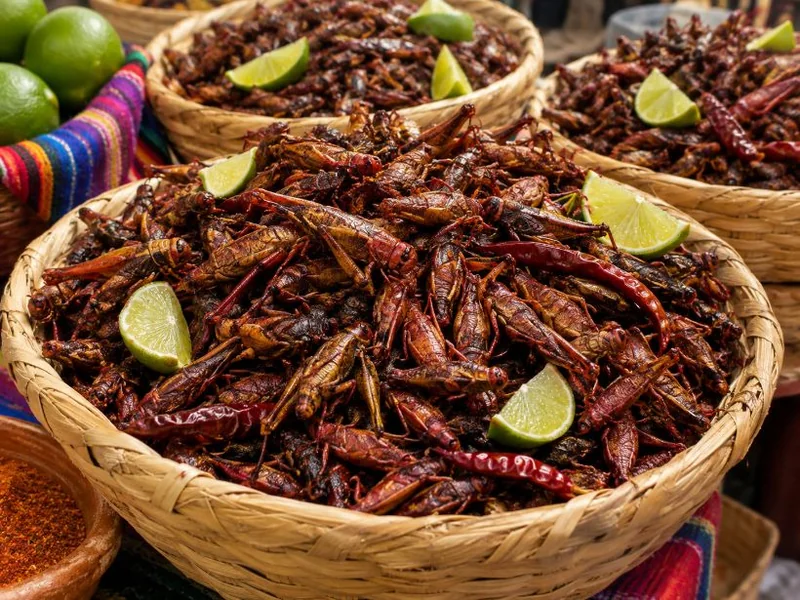
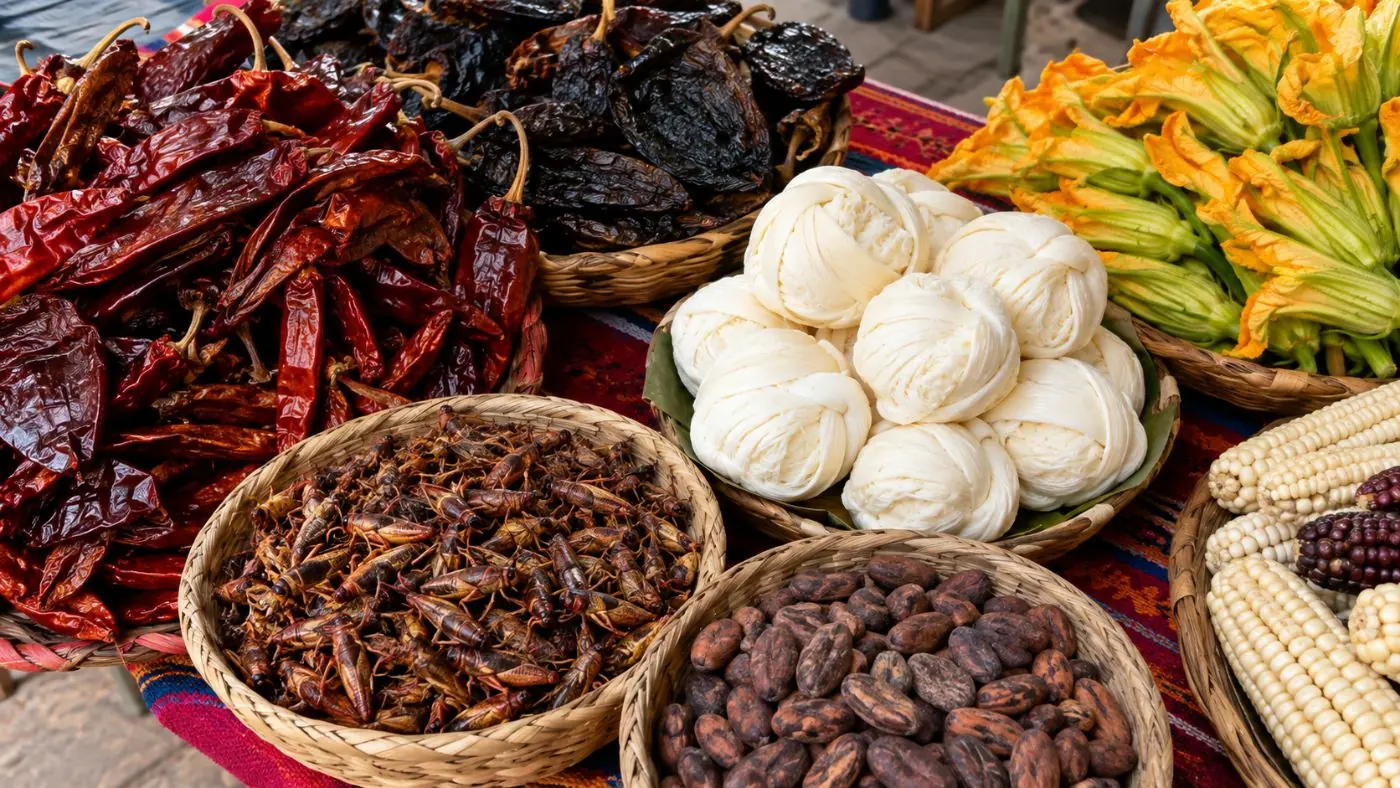
string cheese, made by the same stretched-curd method as mozzarella but wound into a ball and stringier when it melts. Chapulines,
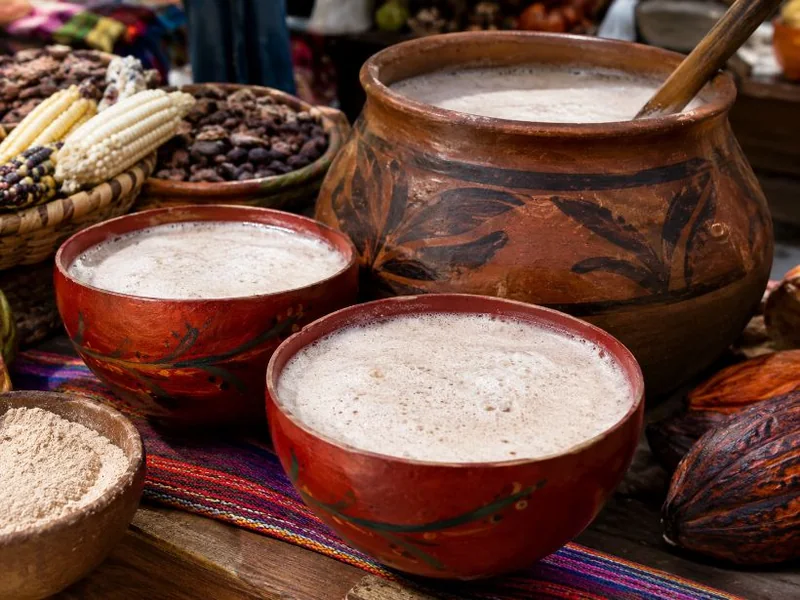
toasted grasshoppers with lime and chile, turn up on esquites and in baskets in every market. To drink, there is tejate, a cold
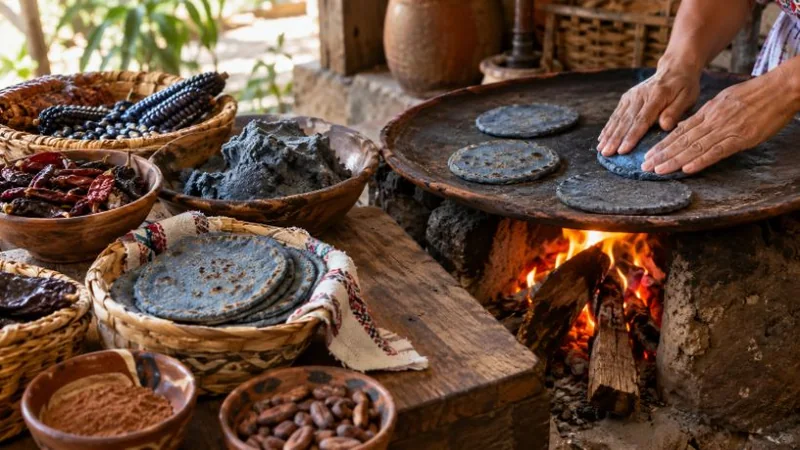
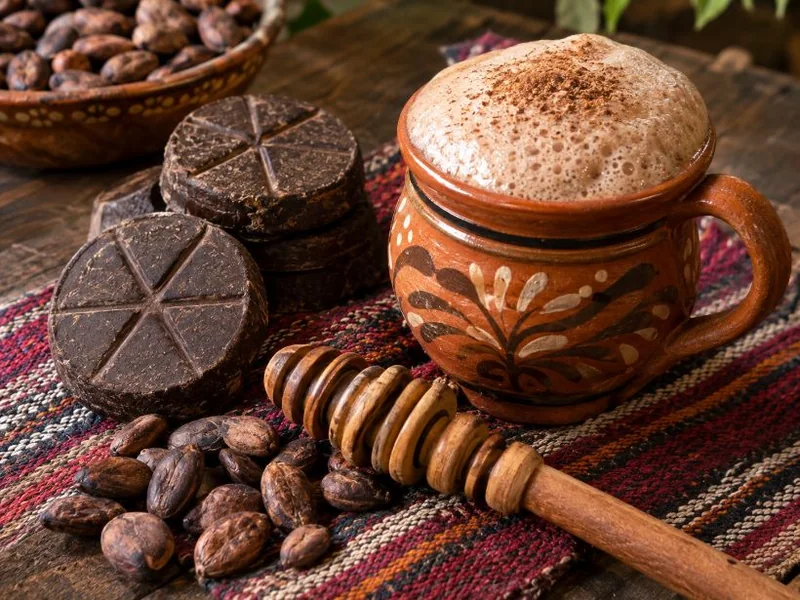
pre-Hispanic drink of toasted maize, cacao, mamey pit and flor de cacao with a pale foam on top; hot chocolate, ground with sugar and
cinnamon; champurrado, thick with corn; and mezcal.
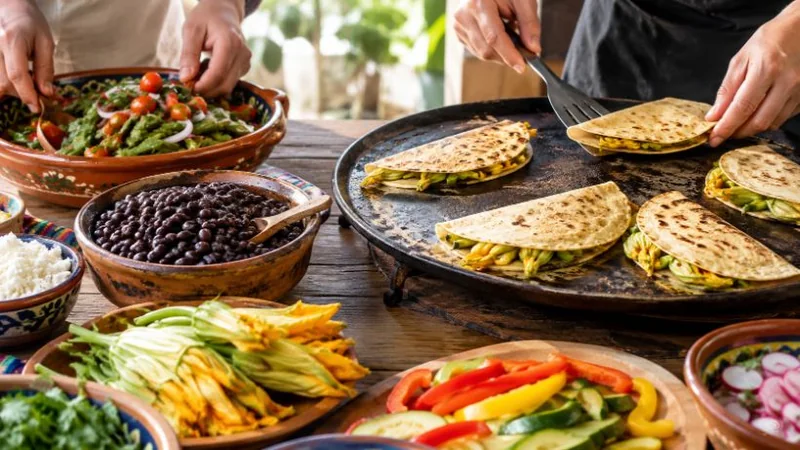
The tlayuda: crisp corn, beans, quesillo and meat, folded over the charcoal.
Markets by day, stands by night
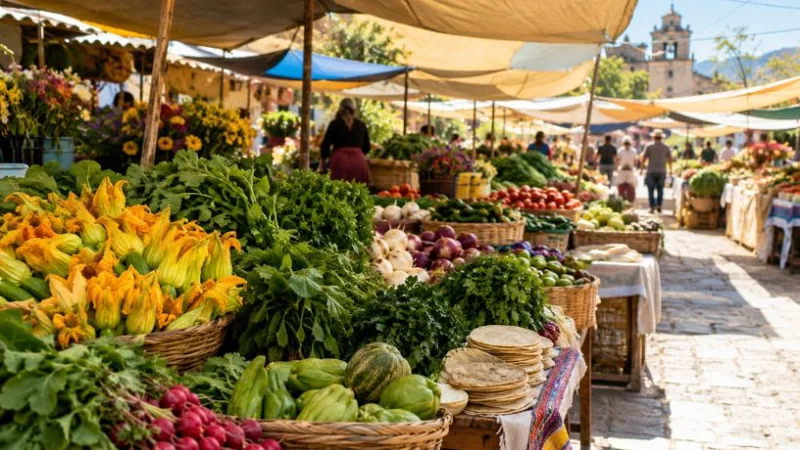
Mercado 20 de Noviembre, two blocks south of the Zocalo, is where many visitors eat their first proper meal. Its comedores serve mole,
soups and tamales, and on the east side the grilled-meat aisle works like an assembly line: you choose thin tasajo beef or red cecina pork at
a stall, it goes on the coals, and other vendors bring tortillas, salsas, grilled onions and chiles. Benito Juarez next door sells cheese,
chocolate and chapulines; the Mercado de Abastos to the west is bigger and more of a working market, where Anthony Bourdain ate barbacoa with
consomme in Parts Unknown. In the evening the city changes register, with stands for tlayudas, tacos and esquites around the centre.
Note: the evening street food tour states it is not suitable for vegetarians, vegans, pregnant women or anyone with food
or nut allergies, and cannot cater for halal, no-pork or celiac diets. If that is you, the Markets Food Tour from Jardin Carbajal offers vegetarian,
pescatarian and gluten-free options, and the Etnofood market tour says it accommodates every diet.
Mole, chocolate and the corn question
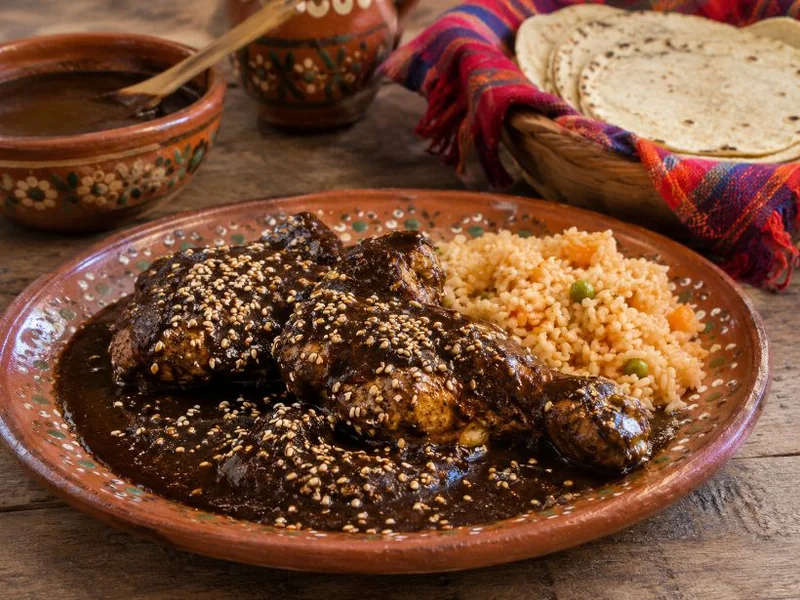
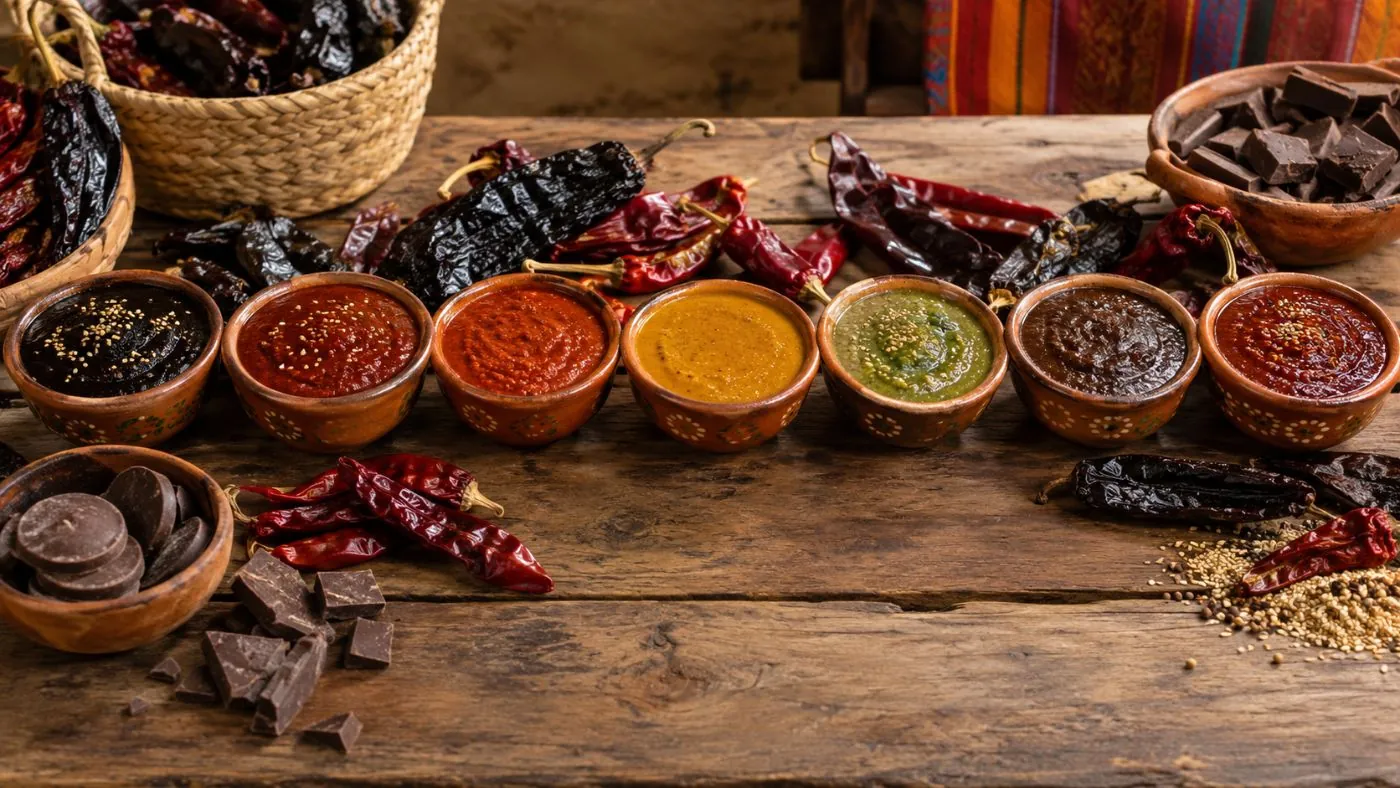
Oaxaca is called the land of seven moles: negro, rojo, coloradito, amarillo, verde, chichilo and manchamanteles. Mole negro is the deep one,
with around 30 ingredients, chocolate among them. Corn runs under everything, and the region's claim on it is old: in Guila Naquitz cave near
Mitla, archaeologists found squash domesticated by about 8000 BC and some of the oldest directly dated maize cobs anywhere. The wild ancestor of
corn, though, is traced to the Balsas river valley further west, so Oaxaca is one of corn's earliest homes rather than its single birthplace.
Mole negro: the most complex of Oaxaca's seven moles.
Which tour, for which eater
For a first night and a big appetite, the evening street tour covers 14+ tastings over 7 to 8 stops and ends with mezcal and flan at the Zocalo.
For a short introduction, the Food and Markets Tour takes 2.5 hours with a group of up to 6 and includes a meal. For three markets in one
morning, the Markets Food Tour from Jardin Carbajal lists 20+ tastings. If you would rather cook, the mole workshop and the vegetarian class each
start at the market and cap the group at 4. On a Sunday, the Tlacolula trip adds a village market and a family mezcal distillery.
The food tours guide puts them side by side.
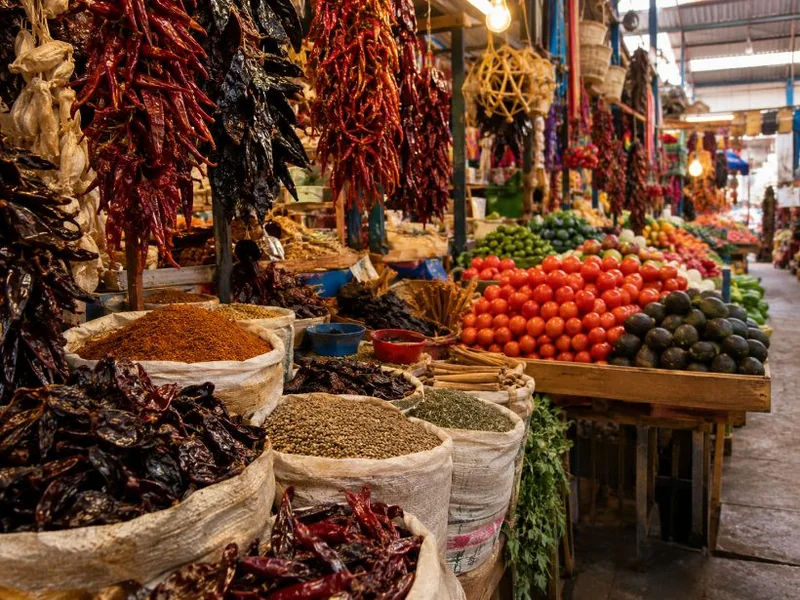
Chiles, spices and produce: the raw material of every tour.
Straight answers to what people ask most about eating in Oaxaca.
What food is Oaxaca famous for?
Mole first of all: Oaxaca is often called the land of seven moles, from mole negro to amarillo and chichilo. Then tlayudas, memelas, quesillo (Oaxaca string cheese), chapulines (toasted grasshoppers), tejate, hot chocolate and mezcal. The street food guide explains each one and where it is usually found.
Is it safe to eat street food in Oaxaca?
Generally yes for visitors who use basic judgment: eat at busy stands where food is cooked to order, drink bottled or filtered water and go easy on raw salads and cut fruit for the first days. The safety guide covers habits, diets and allergies.
Which Oaxaca food tour is actually a street food tour?
Of the tours on this page, the evening street food tour is the one built as a crawl of street stands after dark, ending at the Zocalo. Most others are daytime market walks or cooking classes, which is where much of Oaxaca's street food really lives.
Can vegetarians do a food tour in Oaxaca?
Yes, but choose carefully. The evening street tour states it is not suitable for vegetarians or vegans. The Markets Food Tour from Jardin Carbajal offers vegetarian, pescatarian and gluten-free options, the Etnofood market tour says it accommodates every diet including vegan, and there is a vegetarian cooking class.
Where did Anthony Bourdain eat in Oaxaca?
In Parts Unknown (2014) he ate barbacoa with consomme at the Mercado de Abastos and had a meal at Tlamanalli in Teotitlan del Valle. In A Cook's Tour (2001) he visited Mercado 20 de Noviembre for chocolate, chorizo, chapulines and menudo. The markets guide has more.
Where can I find street food in Oaxaca?
By day, in and around the markets: Mercado 20 de Noviembre with its smoky grilled-meat aisle, Benito Juarez next door and the big Mercado de Abastos. In the evening, at stands and corners around the centre, where tlayudas, tacos and esquites appear. A Sunday trip reaches the Tlacolula market.
Is Oaxaca cheese just mozzarella?
No. Quesillo uses the same stretched-curd method as mozzarella, but it is a moister, stringier cheese wound into a ball, and it melts into tlayudas, memelas and quesadillas. Mole, chocolate and cheese explains the difference.
What is Oaxacan chocolate like?
Cacao ground with sugar and usually cinnamon, often almonds too, drunk hot with water or milk and beaten to a foam. It also goes into mole, and into champurrado, a thick chocolate and corn drink. Tejate, made with maize and cacao, is served cold.
How many days is enough in Oaxaca City?
Three days is a good minimum for a food-first visit: one evening street tour, one market morning, one cooking class, with a Sunday for Tlacolula if the dates allow. The itinerary guide lays it out day by day.
How long are Oaxaca food tours?
On this page they run from 2.5 hours (the Food and Markets Tour) to 4 hours (the evening street tour and the two longer market tours). The Tlacolula Sunday trip and the mezcal tour take about 5 hours with transport.
When is the best time to visit Oaxaca for food?
Any month works. November to May is the dry season; June to September brings afternoon and evening rain, so pack rain gear for an evening tour. The Guelaguetza in July and Dia de Muertos in late October and early November are the busiest weeks, so book tours early then.
Is Oaxaca the birthplace of corn?
Partly. Guila Naquitz cave near Mitla holds some of the oldest directly dated maize cobs found anywhere, and squash there was domesticated thousands of years earlier, but the wild ancestor of corn is traced to the Balsas river valley further west.
Ready to book
Find the Oaxaca food tour that fits you.
Evening stands, market mornings and cooking classes; each listing states its own cancellation terms.

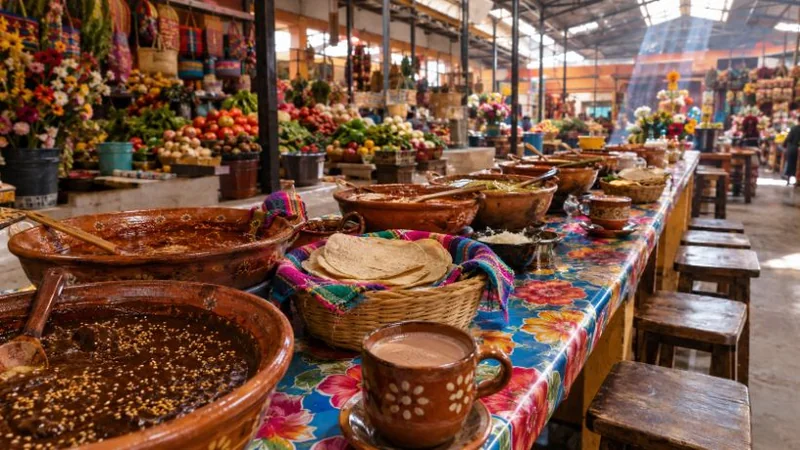 Market breakfast or lunch
2.5 hoursMax 6, age 14+Free cancellation
Market breakfast or lunch
2.5 hoursMax 6, age 14+Free cancellation