Booking choice: The mole workshop with a traditional cook. Book this Compare options below
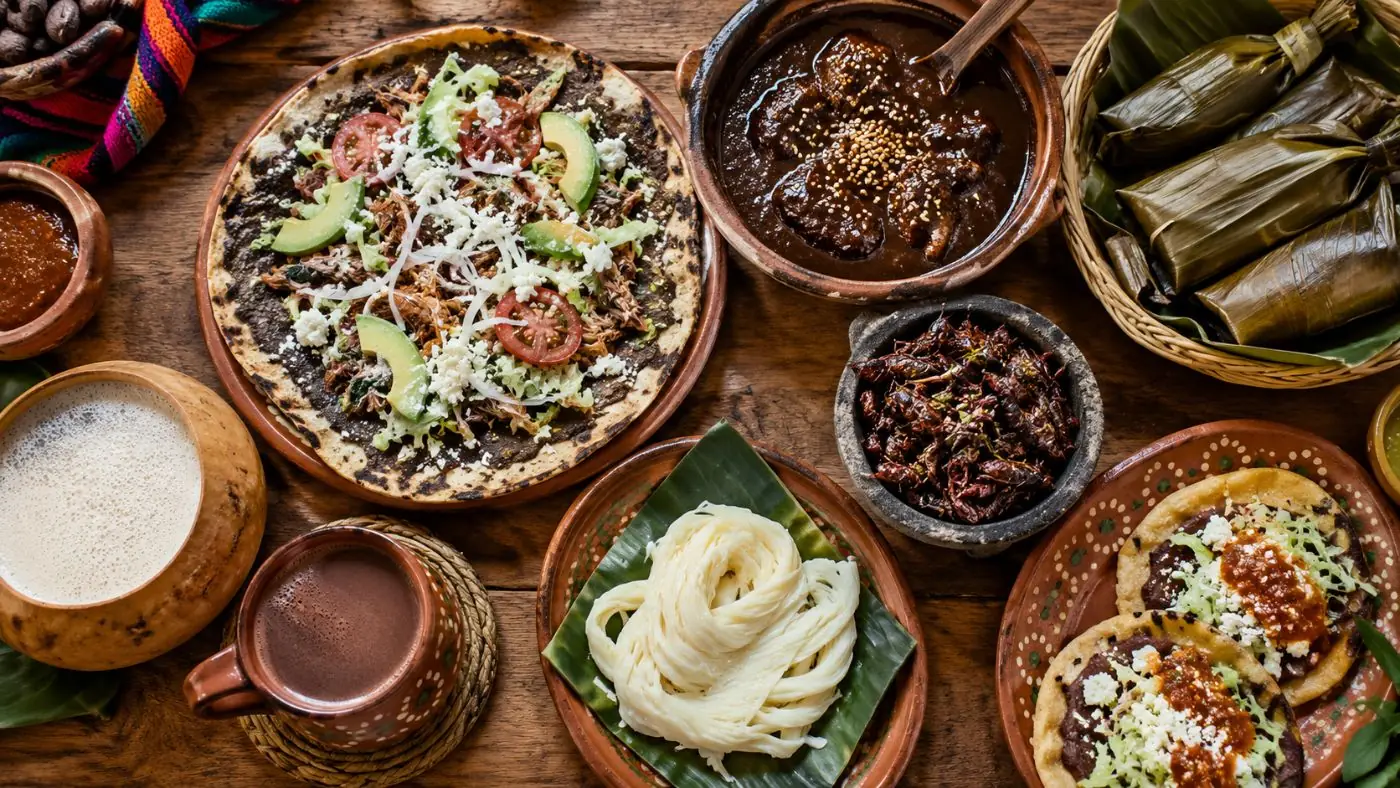
Three foods sum up Oaxacan cooking for many visitors: mole, chocolate and cheese. They are linked. Chocolate goes into mole, and quesillo melts inside tlayudas and quesadillas served next to it. Behind all of them stands corn, the base of Oaxacan cooking for thousands of years, and the drink tejate brings corn and cacao together in one cup.
Some popular claims about these foods are only partly true. Oaxaca is often called the birthplace of corn, and Oaxaca cheese is often described as a kind of mozzarella. This guide sets out what the sources say, and it explains the difference between tasting these foods on a tour and learning to cook them in a class. For the wider picture of what to eat, read the guide to Oaxaca street food.
Quick answer
Seven moles are commonly listed for Oaxaca, and mole negro is the most complex, with roughly 30 ingredients. Quesillo is in the same stretched-curd family as mozzarella, but it is a different, moister and stringier cheese. Oaxacan chocolate is mostly drunk hot and foamy. Oaxaca is one of the earliest places where domesticated corn is found, but its wild ancestor points to Guerrero.
What are the seven moles of Oaxaca?
The seven moles commonly listed for Oaxaca are negro, rojo, coloradito, amarillo, verde, chichilo and manchamanteles.
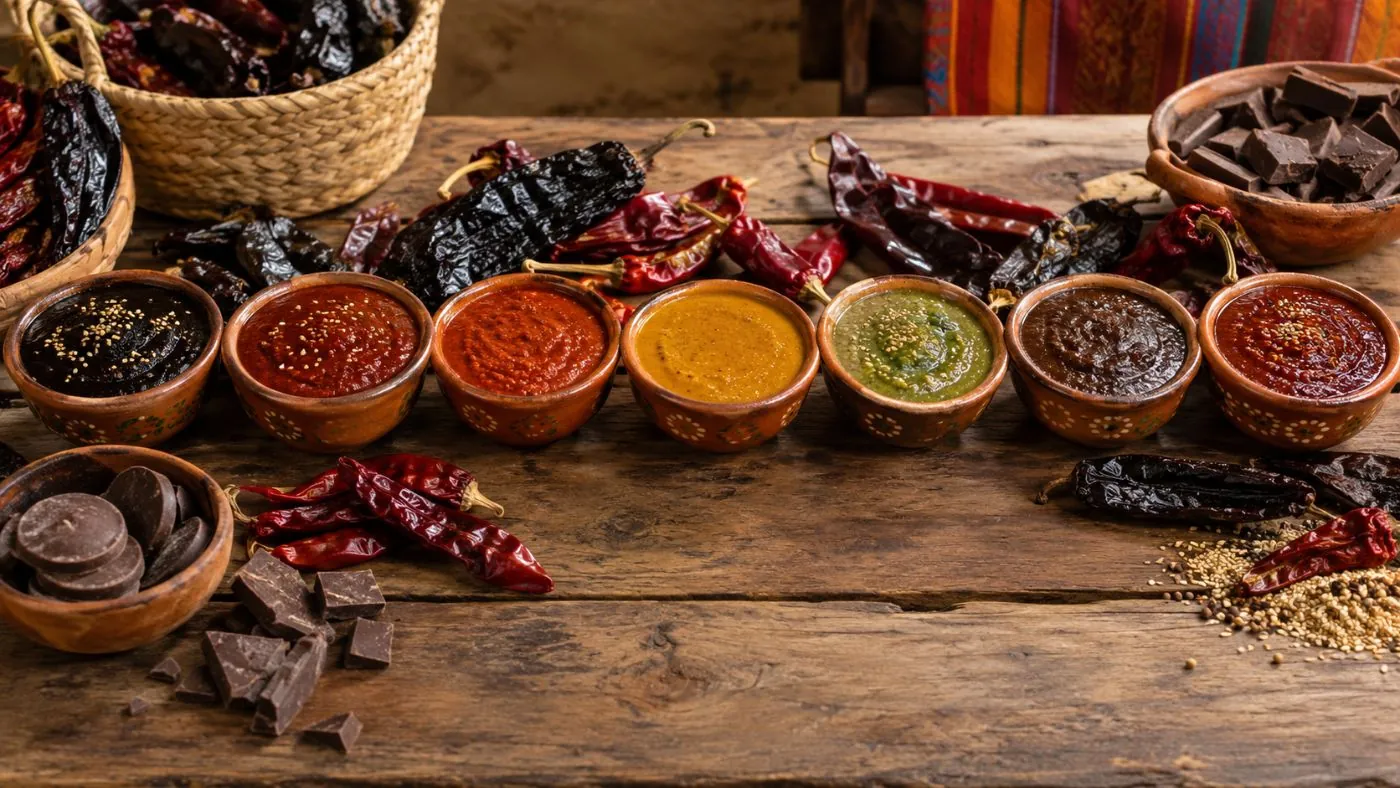
Mole is a family of sauces, not a single recipe. Each Oaxacan mole has its own mix of chiles, spices, seeds and other ingredients, and each family cooks its own version. The names describe the colour or character of the sauce. Coloradito is a reddish mole, amarillo a yellow one, verde a green one, and manchamanteles means tablecloth stainer.
| Mole | Name in English | Note |
|---|---|---|
| Negro | Black | The most complex, with roughly 30 ingredients |
| Rojo | Red | One of the seven |
| Coloradito | Reddish | One of the seven |
| Amarillo | Yellow | Used in empanadas de amarillo |
| Verde | Green | One of the seven |
| Chichilo | No direct translation | One of the seven |
| Manchamanteles | Tablecloth stainer | One of the seven |
What is in mole negro?
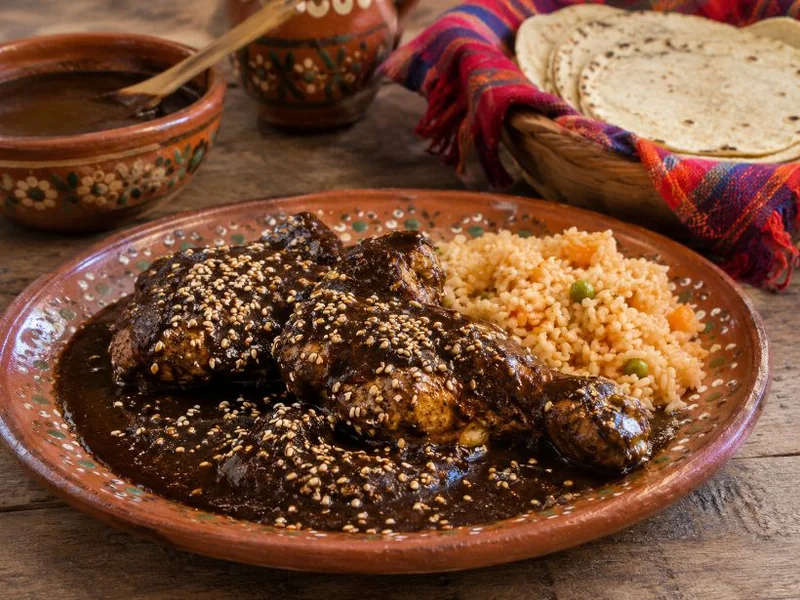
Mole negro is the most complex of the seven, with roughly 30 ingredients according to Mexico News Daily, including chiles and chocolate.
Mole negro is the dark, rich sauce that most visitors picture when they think of Oaxacan mole. Chiles and chocolate are part of the mix, along with many other ingredients. Visitors meet it over chicken with sesame, and inside tamales wrapped in banana leaf. Anthony Bourdain ate tamales with mole negro on his 2001 visit for A Cook's Tour.
The best way to understand mole negro is to see it made. The Oaxacan Mole Workshop with a Traditional Cook starts with a market walk for ingredients, then teaches mole, sauces and a typical dessert in a group of up to 4.
A market walk for ingredients, then mole, sauces and a typical dessert with a traditional cook, in a group of up to 4.
Book thisIs Oaxaca cheese just mozzarella?
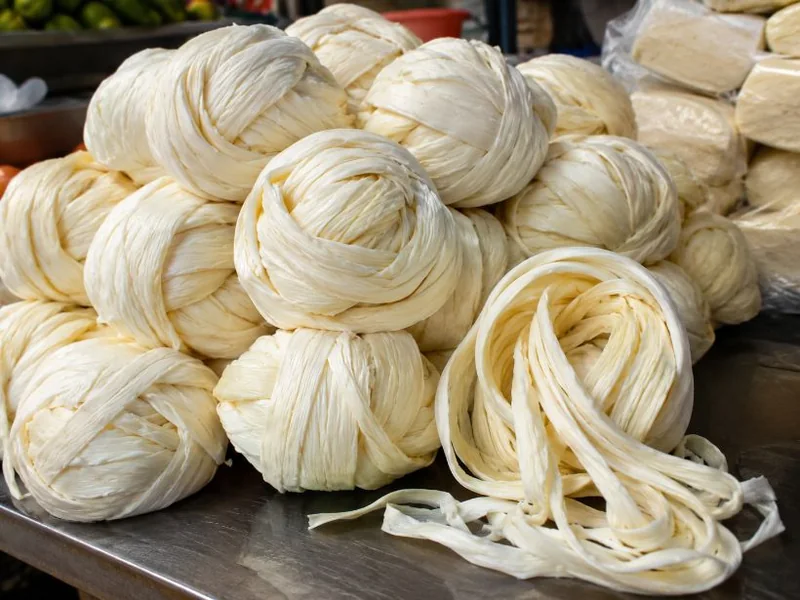
No. Quesillo, or queso Oaxaca, belongs to the same stretched-curd (pasta filata) family as mozzarella, but it is a different cheese: moister, stringier and sold wound into a ball.
Quesillo is a cow's milk cheese made by stretching the curd, the same basic technique used for mozzarella. That is where the comparison comes from. But the result is its own cheese. Quesillo is wound into balls, and it is eaten by pulling it apart into strings. It melts well, which is why it is used in tlayudas, quesadillas and the piedrazo with quesillo listed on the evening street tour.
Its origin story has two versions. Wikipedia attributes the technique to Dominican friars, while a local story credits the town of Reyes Etla. You can buy quesillo at Mercado Benito Juarez, where it is sold wound into balls.
What is Oaxacan chocolate like?
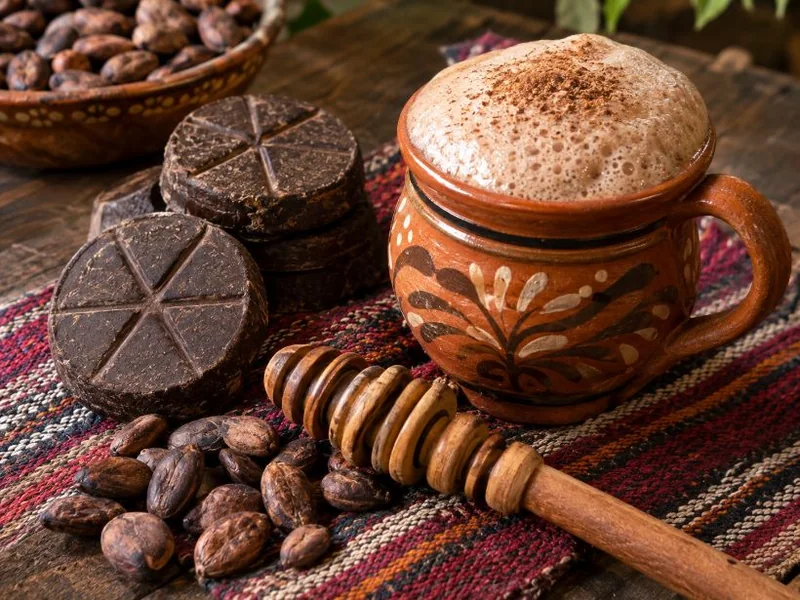
Oaxacan chocolate is cacao ground with sugar and usually cinnamon, often with almonds. It is mostly drunk hot with water or milk, beaten to a foam, and it is also used in mole.
Many visitors are surprised that chocolate in Oaxaca is mainly a drink. The ground chocolate is mixed with hot water or milk and beaten until a foam forms on top. The cinnamon gives it a spiced flavour, quite different from a smooth chocolate bar. Champurrado is a thicker drink of chocolate and corn.
- Where to try it: in the markets, and on tours. The Oaxaca Markets Food Tour lists a chocolate shop among its stops, and the evening street tour lists champurrado.
- In food: chocolate is part of mole negro and other moles.
- To take home: blocks or tablets of chocolate are sold at Mercado Benito Juarez.
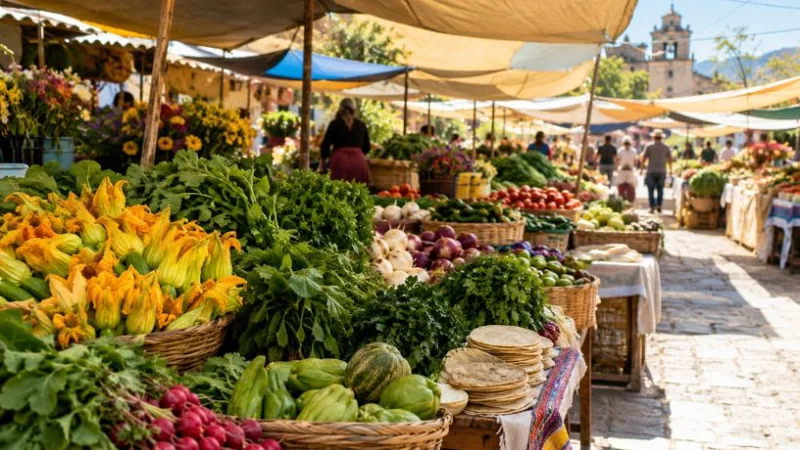
A chocolate shop, the central markets and the guide's family business: 20+ dishes and drinks on one 4-hour morning tour.
Book thisWhat is tejate?
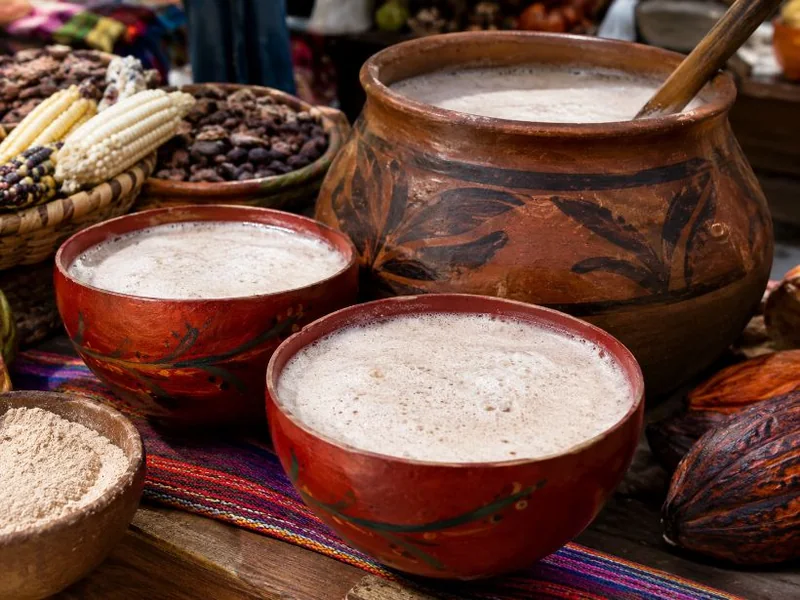
Tejate is a pre-Hispanic, non-alcoholic Zapotec and Mixtec drink made from toasted maize, fermented cacao beans, mamey pit and flor de cacao, served cold with a layer of foam.
The ingredients are ground into a paste, then mixed with cold water by hand. As the paste is worked, a pasty foam of cocoa butter rises to the top. It is served cold, often in painted gourd bowls.
Tejate is sold in the markets. The Etnofood market tour lists pre-Hispanic drinks among its tastings, which is a way to try it with someone who can explain its history.
Is Oaxaca the birthplace of corn?
Partly. The oldest directly dated maize cobs come from Guila Naquitz cave near Mitla in Oaxaca, but genetic studies place maize's wild ancestor, teosinte, in the Balsas river valley in Guerrero.
The claim is half true. In Guila Naquitz cave, near Mitla in the Oaxaca valley, archaeologists found squash (Cucurbita pepo) domesticated by about 8000 BC and the oldest directly dated maize cobs, from about 4300 to 4100 BC. These finds make Oaxaca one of the earliest places where domesticated corn is found.
However, genetic studies point to the wild grass teosinte in the Balsas river valley, further west in Guerrero, as the ancestor of maize. A fair way to put it is that Oaxaca is one of the earliest places where domesticated corn is found, rather than the single birthplace of corn. Corn remains at the heart of Oaxacan cooking today, as tortillas, masa, tejate and champurrado.
Corn, chocolate and chiles at family-run kitchens and street stands: a 3-hour tour with options at 9am, 12pm or 6pm.
Book thisShould you take a cooking class or a tasting tour in Oaxaca?
A tasting tour shows you many dishes in a few hours; a cooking class teaches you one or two dishes in depth. Both classes on GetYourGuide start with a market visit.
If you want to taste mole, chocolate and quesillo side by side, a market tour covers them quickly. If you want to go home able to make a mole, a class is the better fit.
Group size is another difference. Both cooking classes take up to 4 people, so there is time for questions and hands-on work. The market tours take up to 8 or 10 people, and they cover more ground. The table sums up what each listing states.
| Listing | Focus | Length | Group | Includes, per listing |
|---|---|---|---|---|
| Mole workshop | Mole, sauces and a dessert | 3.5 hours | Up to 4 | Market walk, mezcal for 18+, seasonal fruit water |
| Vegetarian cooking class | Vegetarian salad, main and dessert | 3.5 hours | Up to 4 | Market visit, coffee or tea, recipe, mezcal, transportation |
| Oaxaca Markets Food Tour | Tasting across four markets | 4 hours | Up to 8 | 20+ dishes and drinks, tips |
| Food Tour with Local Chef | Corn, chocolate and chiles | 3 hours | Private or small group | All tastings and soft drinks |
What should you know before a cooking class in Oaxaca?
Both classes meet at the Etnofood kitchen on Xicotencatl 609 in the centre, about five blocks from the Zocalo, and both take up to 4 people.
The mole workshop is not suitable for children under 10, people with back problems or people with low fitness, according to the listing, because it involves a market walk and time on your feet in the kitchen. Mezcal is offered to guests over 18. The vegetarian class states that it is wheelchair accessible and includes transportation, the recipe, coffee or tea and mezcal.
Both listings state free cancellation up to 24 hours before. For a full week of food, see the Oaxaca itinerary for food lovers.
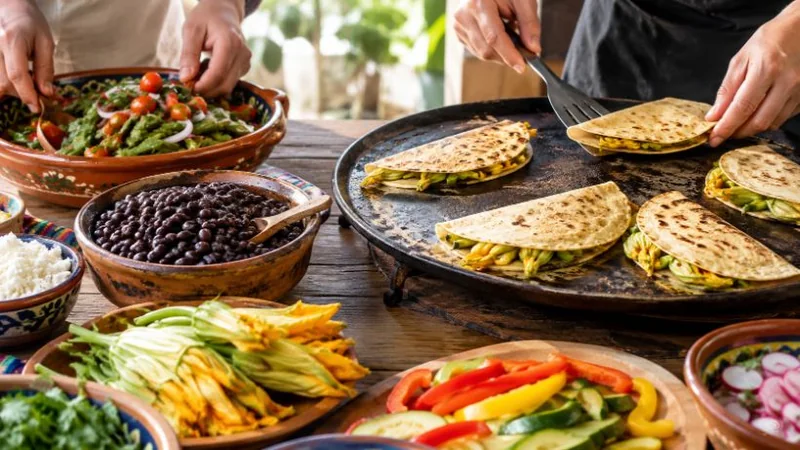
A market visit for organic produce, then a vegetarian salad, main and dessert in a class of up to 4, with the recipe to take home.
Book thisFrequently asked questions
How many moles are there in Oaxaca?
Seven moles are commonly listed: negro, rojo, coloradito, amarillo, verde, chichilo and manchamanteles. Families also make their own versions.
Is quesillo the same as mozzarella?
No. Both are stretched-curd cheeses, but quesillo is moister, stringier and sold wound into a ball.
Is Oaxacan chocolate eaten or drunk?
Mostly drunk, hot with water or milk and beaten to a foam. It is also used in mole.
Was corn first domesticated in Oaxaca?
Oaxaca's Guila Naquitz cave has the oldest directly dated maize cobs, but maize's wild ancestor points to the Balsas valley in Guerrero.
Ready to book
Choose your tour
Booked on GetYourGuide; each listing states its own cancellation terms.
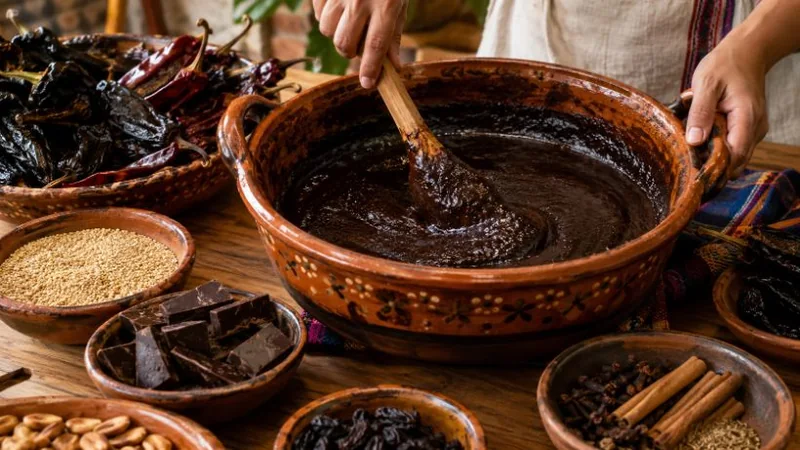
Oaxacan Mole Workshop with a Traditional Cook
Buy the ingredients at the market, then make mole, sauces and a typical dessert with a traditional cook; mezcal for adults
Vegetarian Cooking Class with Market Visit
The vegetarian way into Oaxacan food: organic produce at the market, then a salad, a main and a dessert cooked and shared
Oaxaca Markets Food Tour, 20+ Tastings
Three markets in one morning, La Cosecha, 20 de Noviembre with its grilled-meat aisle and Benito Juarez, plus a chocolate shop; vegetarian, pescatarian and gluten-free options